




-
Ghana - 1 Unit CHANGAN CS75 PLUS SUV
 Jun 11, 2026
-
On May 26, 2025, CRUKING exported one POLARISE X7 electric SUV to Mexico.Mar 12, 2026
-
On April 18, 2025, CRUKING exported one POLARISE X6 electric SUV to Kazakhstan.Mar 12, 2026
-
On March 12, 2025, CRUKING exported one POLARIS X5 electric SUV to Saudi Arabia.Mar 12, 2026
-
CRUKING exported one PLOARIS X7 electric SUV to the United Arab EmiratesMar 12, 2026
Oct 21, 2026
 222
Battery safety is a key consideration for consumers when purchasing all-electric vehicles. Battery thermal runaway can not only cause fires or explosions but also generate high-temperature toxic fumes, posing additional risks to occupants. Therefore, controlling these fumes and minimizing their impact on the passenger compartment has become a critical focus in battery safety protection.
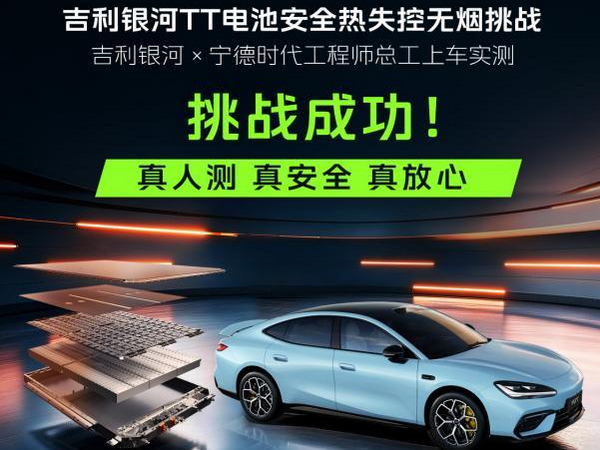
As the first C-segment AI-powered all-electric sports sedan in GEELY Galaxy’s “Electric 2.0” era, the Galaxy TT, in collaboration with CATL, has introduced the NP3.0 thermal runaway protection technology and conducted thermal runaway tests with live occupants in the passenger compartment to further validate the vehicle’s battery safety capabilities under extreme conditions.

Live Occupant Compartment Tests Validate Battery Safety Performance
The tests were conducted at the national-level Zhaoshang Automotive Research Institute Fire Safety Laboratory. Unlike conventional external tests, test personnel entered the passenger compartment and installed a trigger device inside the battery pack to directly induce thermal runaway in a single battery cell, thereby evaluating the battery system’s safety performance.
The test was conducted in a high-temperature environment of 40°C, with the battery’s state of charge (SOC) approaching 96%, further increasing the difficulty of the test.
The test results showed that after a single battery cell experienced thermal runaway, the battery pack did not catch fire, explode, or allow the thermal runaway to spread. At the same time, dedicated, directional smoke exhaust channels and a multi-stage cooling and purification system directed the high-temperature smoke out of the vehicle; no significant smoke intrusion into the passenger compartment was observed during the test. The vehicle also utilized battery management system (BMS) fault alerts and mobile app (APP) warnings to help users promptly identify abnormal conditions.
NP3.0 Technology: Enhanced Protection Against Battery Thermal Runaway
The focus of NP3.0 technology is to control the high-temperature smoke generated by thermal runaway and reduce the likelihood of it spreading into the passenger compartment. Through dedicated smoke exhaust channels and a multi-stage cooling and purification system, smoke is cooled and filtered inside the battery pack before being expelled from the vehicle, thereby minimizing its impact on the interior environment.
Additionally, the Galaxy TT utilizes lithium iron phosphate (LFP) battery cells and is equipped with the Xingrui AI Cloud Power system and an intelligent BMS system. These systems help identify potential risks and enhance battery management capabilities by continuously monitoring battery status, analyzing operational data, and providing early warnings of anomalies.
Building Multi-Layered Safety Protection from the Battery to the Body
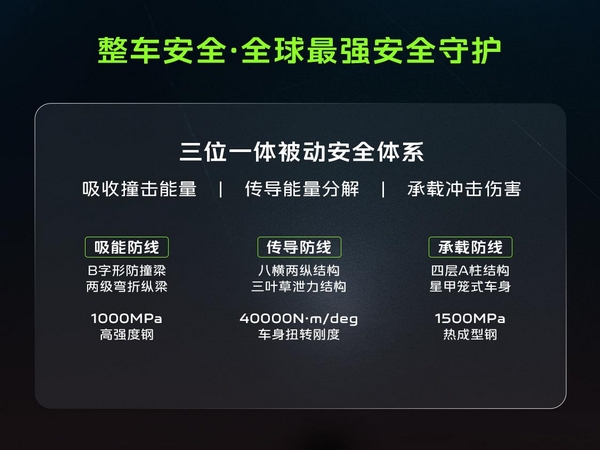
In addition to the battery system, the Galaxy TT leverages the GEA Evo global intelligent new energy architecture and features a 720° Star Armor cage-type body. The body utilizes materials such as high-strength steel and aerospace-grade aluminum alloy, with these materials accounting for nearly 80% of the structure.
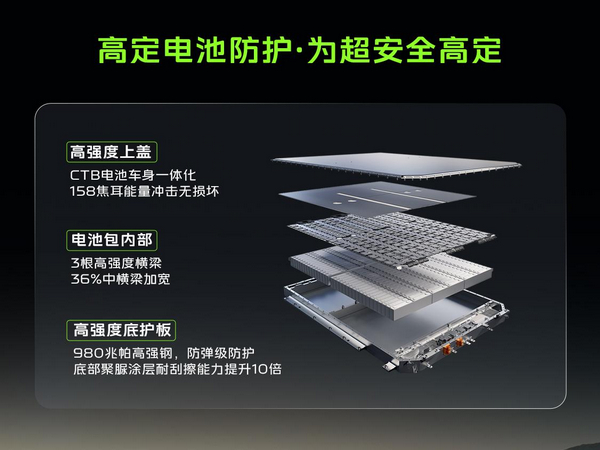
In the battery installation area, the vehicle features a cross-shaped structure and multiple mounting points, with side protection reinforced by a sandwich-composite protective structure in the sills. These designs aim to enhance the structural strength of the body and provide additional physical protection for the battery pack. According to official sources, the battery pack has also passed more than 100 rigorous validation tests.
Balancing Safety, Charging Efficiency, and Driving Experience
In terms of product specifications, the entire Galaxy TT lineup is equipped with an 800V high-voltage platform, a CATL Shenxing TT custom battery, and the Thunder 16-in-1 intelligent electric drive system, and supports 6C ultra-fast charging technology.
The chassis features a front all-aluminum double-wishbone and rear five-link suspension, tuned by the Lotus engineering team. In terms of comfort features, the vehicle comes standard with ventilation, heating, and massage functions for the driver’s seat, a heat pump air conditioning system, and a panoramic sunroof, balancing driving comfort with everyday practicality.

Overall, the Galaxy TT enhances its comprehensive product competitiveness through multiple aspects, including battery thermal runaway protection, intelligent battery management, body structure design, and charging technology. This test also extends the focus on battery safety beyond fire and explosion prevention to include smoke control, providing consumers with a reference for understanding the safety design of pure electric vehicles.
It is important to note that laboratory test results reflect performance under specific test conditions and do not represent outcomes in all accident scenarios. During daily use, users should continue to follow the vehicle’s operating instructions, charge the vehicle properly, and monitor the battery status and fault alerts in a timely manner.

-
Ireland Customers Visited POLARIS OfficeSep 01, 2026
-
Algeria Customer Visited POLARIS OfficeJul 14, 2026
-
Strengthening Global Partnerships: Clients Visit POLARISMar 12, 2026
-
POLARIS Hosts International Clients for Business ExchangeMar 12, 2026
-
Overseas Partners Visit POLARIS for Factory TourMar 12, 2026








 +86-21-6109-6368
 +86-21-6109-6368
 +86-159-5895-5352

 Suite 5506, Shanghai Tower, No. 501 Yincheng Middle Road, Pudong New Area, Shanghai 200120, China